
A monoclonal secondary antibody is a highly specific immunological reagent produced from a single B-cell clone, designed to bind exclusively to primary antibodies from a specific host species. Unlike polyclonal counterparts, monoclonal secondary antibodies offer unmatched batch-to-batch consistency and minimal cross-reactivity — making them indispensable in modern immunoassay workflows. As research demands increasingly rigorous controls and reproducibility, the shift toward monoclonal secondary reagents reflects a broader commitment to experimental precision.
Why Secondary Antibodies Matter in Research
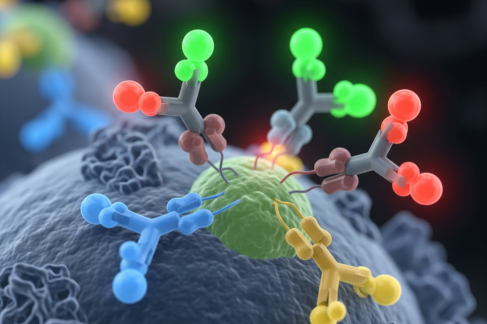
In most immunodetection techniques, primary antibodies target the antigen of interest. However, direct detection of these primary antibodies can be limited in sensitivity. Secondary antibodies amplify the signal by recognizing and binding to the Fc region of the primary antibody. This indirect detection strategy significantly enhances assay sensitivity, especially when the secondary antibody carries a fluorescent dye, enzyme, or biotin label. The secondary antibody effectively acts as a signal amplifier — each primary antibody can be recognized by multiple secondary antibody molecules, exponentially increasing detection output and making low-abundance targets visible in complex biological samples.
Monoclonal vs. Polyclonal Secondary Antibodies
Monoclonal secondary antibodies are derived from a single hybridoma cell line. This means every molecule in the batch targets the exact same epitope on the primary antibody's Fc region. The key advantages include:
Exceptional specificity — reduced background noise in multi-labeling experiments
Consistent lot-to-lot reproducibility — critical for longitudinal studies
Lower cross-reactivity — minimizes interference when using primary antibodies from related species
Polyclonal variants recognize multiple epitopes on the primary antibody, offering higher signal amplification but at the cost of greater variability and potential cross-reactivity. In contrast, monoclonal secondary antibodies are the preferred choice when assay precision and experimental reproducibility are paramount — such as in clinical research, long-term biomarker studies, or multi-color fluorescence imaging. For researchers troubleshooting high background or inconsistent results, switching to monoclonal secondary reagents is often a first and effective intervention.
Common Applications of Monoclonal Secondary Antibodies
Monoclonal secondary antibodies are routinely used across a broad range of immunoassay techniques:
Western Blot (WB): Detect protein bands with sharp, low-background signal
Immunofluorescence (IF): Enable precise co-localization studies in multi-color imaging
Flow Cytometry: Provide reliable quantification of cell surface markers
Immunohistochemistry (IHC): Support tissue section analysis with minimal non-specific staining
ELISA: Enhance signal detection in both direct and sandwich assay formats
Their utility in multiplex experimental setups is particularly notable. When two or more primary antibodies from different host species are used simultaneously — for example, a mouse anti-protein A and a rabbit anti-protein B — species-specific monoclonal secondary antibodies ensure that each signal is cleanly and independently resolved without cross-contamination of channels.
Selecting the Right Monoclonal Secondary Antibody
When choosing a secondary antibody, several factors must be considered:
Host species of the primary antibody: The secondary must be raised against the same species (e.g., anti-mouse, anti-rabbit, anti-goat)
Detection label: Choose enzyme conjugates (HRP, AP) for colorimetric assays and fluorochrome-conjugated variants for imaging applications
Species cross-adsorption: Pre-adsorbed secondaries are preferred when working with tissue samples containing endogenous immunoglobulins
Isotype recognition: Some secondary antibodies are isotype-specific (IgG, IgM, IgA), which is important when multiplexing primary antibodies from the same species
Cross-adsorption is especially critical when working with rodent tissue samples, where endogenous mouse immunoglobulins can cause substantial background if the secondary antibody is not pre-adsorbed against mouse serum proteins. Similarly, tissue samples from species phylogenetically close to the primary antibody host require careful secondary antibody selection to minimize non-specific binding.
Conjugation Options
Monoclonal secondary antibodies are available with a range of conjugates to suit different experimental needs:
Fluorescent dyes (FITC, TRITC, Alexa Fluor series) — for imaging and flow cytometry
HRP (Horseradish Peroxidase) — for chemiluminescent or colorimetric Western blot detection
Biotin — for signal amplification using streptavidin-based systems
Alkaline Phosphatase (AP) — for ELISA and membrane-based assays
The choice of conjugate directly impacts assay sensitivity and format. Alexa Fluor-conjugated secondaries, for example, offer superior photostability and brightness for confocal microscopy, while HRP conjugates remain the standard for ECL-based Western blot detection. Biotinylated secondary antibodies afford an additional layer of signal amplification through streptavidin-enzyme or streptavidin-fluorophore complexes, making them ideal when maximum sensitivity is required.
Conclusion
Monoclonal secondary antibodies are precision tools that elevate the reliability and reproducibility of immunoassay results. Whether used in Western blotting, immunofluorescence, or flow cytometry, their single-clone origin ensures consistent performance across experiments and laboratory sites. For researchers seeking high-specificity secondary antibodies with minimal cross-reactivity, selecting a well-validated monoclonal option is a sound scientific decision that pays dividends in data quality, troubleshooting time saved, and experimental confidence.









Write a comment ...